
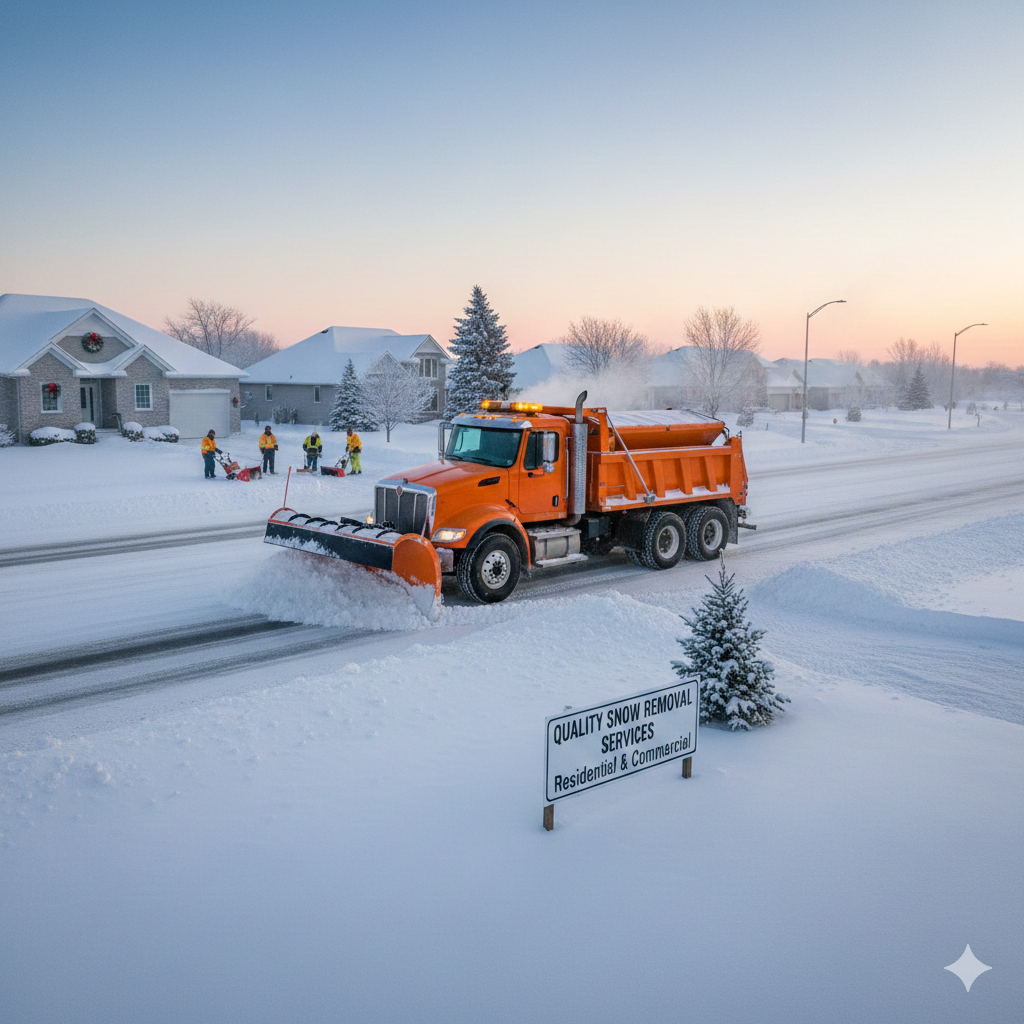
Winter can turn your driveway, sidewalk, and entryway into hazards that steal time and peace of mind. When you hire a professional snow removal service, you get prompt clearing, reliable ice control, and safer access for your home or business—saving you effort and often avoiding municipal fines.
Choose a Snow Removal Service provider that guarantees timely clearing after storms, uses the right equipment for your property, and includes ice management so you stay safe and compliant.
This article walks through what full-service snow removal covers and how to pick a contractor who matches your needs, budget, and local weather patterns so you won’t waste time or money on the wrong option.
Snow Removal Service Overview
Expect snow removal firm timelines, clear scope, and equipment-matched work for safety and access. You’ll learn what service types exist, how offerings differ for homes vs. businesses, and which techniques crews commonly use.
Types of Snow Removal Services
Snow removal services typically include plowing, shoveling, snow blowing, hauling, and de-icing. Plowing suits driveways, parking lots, and private roads; crews use trucks with plow blades or loaders for large areas. Shoveling and hand-clearing work best for walkways, stairs, and entryways where machines can’t reach.
Snow blowing serves medium-sized driveways and pathways; it reduces manual labor and throws snow clear of surfaces. Hauling applies when sites accumulate large snow piles that must be transported off-site. De-icing—salt, calcium chloride, or sand—addresses ice formation and improves traction; contractors choose products based on temperature and surface type.
You can contract one-off storm clears, seasonal subscriptions with guaranteed response times, or on-demand emergency calls. Ask for equipment lists, salt-use policies, and written response-time guarantees before you sign.
Residential vs Commercial Services
Residential services focus on driveways, sidewalks, steps, and small private lanes. Providers often offer seasonal plans that include automatic visits after a snowfall threshold (e.g., 2–4 cm) and “snowbird” holds while you’re away. Pricing typically uses a per-visit fee, seasonal flat rate, or per-inch charge; confirm whether shoveled areas, roof rakes, or de-icing are included.
Commercial services cover parking lots, loading docks, private roads, and multi-building campuses. Contractors deploy larger fleets, night-shift crews, and coordinated staging to maintain access during business hours. Commercial contracts usually specify benchmarks: service level agreements (SLAs), plow depth standards, liability coverage, and site-specific de-icing protocols. Verify insurance, equipment capacity, and whether snow relocation or salt storage is part of the bid.
Snow Removal Techniques
Plowing uses angled blades to push snow to lot edges or into windrows; operators adjust blade height to protect pavement. For tight areas, crews combine plows with skid-steer loaders and snow blowers to cut down on manual labor. Mechanical removal often precedes hand work to clear doorways and sidewalks.
Hand shoveling and snow blowing handle detailed tasks: corners, steps, and narrow walkways. Crews apply de-icers after clearing; salt works down to about -9°C, while calcium chloride remains effective at lower temperatures. When accumulation exceeds storage capacity, contractors load and haul snow to designated disposal sites to prevent obstructed drains and sightlines.
Maintenance crews monitor weather forecasts and route trucks for efficiency. Ask providers how they protect landscaping, prevent pavement damage, and document completed work with photos or site logs.
Choosing the Right Snow Removal Provider
Focus on the specific services you need, the timing and responsiveness you expect, and clear contract terms that assign responsibility and pricing. Verify equipment, insurance, and references so you know who will arrive and when.
Factors to Consider in Selection
Look for providers that list the exact services you need: driveway plowing, sidewalk shoveling, de-icing, roof raking, and snow hauling. Ask whether they use plows, skid-steers, snow blowers, or hand crews for each task; equipment affects speed and surface damage risk.
Check pricing structure: per-visit, seasonal contract, or per-storm rates. Confirm what triggers service (e.g., 2 cm or 5 cm of snow) and whether there are extra charges for ice treatments, nights/weekends, or multiple daily visits.
Verify insurance and licensing. Ask for proof of liability and workers’ compensation and confirm the provider will cover damage to your driveway, landscaping, or vehicles. Get at least three local references and ask neighbors about punctuality and cleanup.
Service Agreements and Contracts
Insist on a written contract that lists scope, response times, price model, and payment terms. The contract should specify triggers for service, removal locations for snow, and whether they apply salt, sand, or calcium chloride.
Include clauses for emergency calls and no-service exemptions (e.g., unsafe conditions). Require a damage and claims process with timelines: who inspects, how repairs are approved, and expected reimbursement procedures.
Clarify cancellation and renewal terms. If you want automatic renewals, set a notice period to change providers. Preserve copies of all signed documents and receipts so you can compare actual service against the contract.
Evaluating Provider Reliability
Track response time during the first storm. Reliable companies meet their promised window (for example, within 2–4 hours after a 5 cm snowfall) or notify you proactively if they can’t.
Review online ratings and local complaints. Look for consistent reports about timeliness, honoring contracts, and cleanup quality rather than single extreme reviews. Use municipal resources or community groups to confirm any regulatory actions.
Ask about backup plans: extra crews, subcontractors, or mutual-aid arrangements during major storms. Make sure the provider assigns a consistent point of contact and provides real-time updates by text or email so you know when crews will arrive.