You want a fence that fits your budget, solves your problem, and lasts—without wasting time or money. Hiring a reputable contractor streamlines design choices, permits, material selection, and installation so you get a secure, attractive fence that meets your needs.
This article shows how to find qualified fence contractors, what services they typically offer, and how different fence types affect cost and maintenance. Expect practical tips for vetting pros, comparing quotes, and choosing the right style and service for your property.
Hiring Fence Contractors
You should verify credentials, compare clear written quotes, and set a realistic timeline before work starts. Prioritize licensed, insured contractors, get at least three itemized bids, and agree on a phased schedule with milestones and payment terms.
Evaluating Contractor Credentials
Check for a local business license and state contractor registration if your state requires one. Ask for proof of general liability and worker’s compensation insurance; verify policy numbers with the carrier to ensure coverage is active.
Request three recent project references and view photos of finished work similar to yours. Confirm the contractor’s experience with your chosen material (wood, vinyl, metal) and with local permitting or zoning requirements.
Look for memberships or accreditations from trade groups and a positive presence on BBB, Houzz, or Porch. Read several recent customer reviews; focus on how the contractor handled delays, warranty claims, and cleanup.
Comparing Quotes and Services
Ask for written, itemized bids that break out materials, labor, permit fees, and disposal. Compare line items (post type, concrete depth, rail spacing, gate hardware) rather than just final totals so you know what differs between bidders.
Check warranty terms: what’s covered, for how long, and who pays for return trips. Clarify who sources materials and whether upgrades (pressure-treated posts, galvanized fasteners) cost extra.
Agree on payment structure: a reasonable deposit (typically 10–30%), progress payments tied to milestones, and a modest holdback until final inspection. Avoid full upfront payments.
Project Planning and Timelines
Set a start date that accounts for permit processing and material lead times. Confirm who pulls permits and the expected inspection milestones with dates tied to payment releases.
Establish a daily work window and a projected completion date. Include contingency time for weather, supply delays, or unforeseen ground conditions; specify how change orders will be handled and priced.
Document site preparation responsibilities: tree or brush removal, locating underground utilities (call 811), and access for equipment. Require a written cleanup and final inspection plan so you know when the project will be accepted and final payment released.
Types of Fencing Services
You’ll find services that focus on durability, appearance, and cost-effectiveness. Each option below explains typical materials, installation specifics, maintenance expectations, and common use cases so you can match the fence to your needs.
Wood Fence Installation
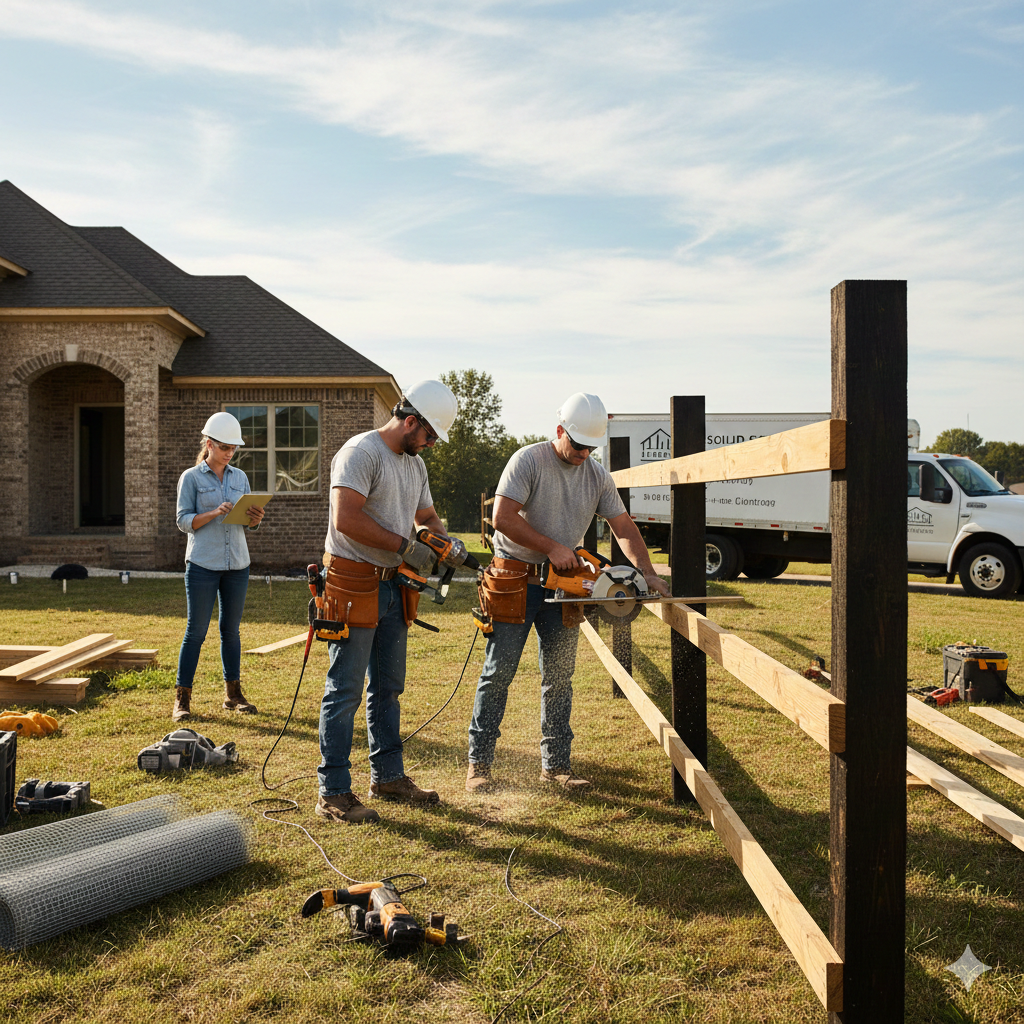
Wood fencing services commonly use species like cedar, redwood, and pressure-treated pine. Contractors handle post-setting, panel construction, and finishing; expect posts set in concrete to 30–36 inches deep in most yards for stability.
You can choose styles such as board-on-board for privacy, picket for curb appeal, or horizontal slats for a modern look. Contractors will discuss height, rail type, and whether to use solid panels or spaced boards based on wind load and local codes.
Finish and maintenance are important. Staining, sealing, or painting extends life—plan on resealing every 2–4 years in moist climates. Repairs usually involve replacing individual boards or rails, which most contractors price per hour or per panel.
Vinyl and PVC Fencing
Vinyl (PVC) fences provide low maintenance and consistent appearance; panels resist rot, insects, and most weathering. Installation requires properly set posts, often with concrete footings and metal post inserts to prevent sagging over time.
You’ll find styles that mimic wood pickets, privacy walls, and vinyl rails for pools. Color is typically factory-applied, so choose early; white and tan are common but darker hues are available for added UV resistance.
Expect minimal upkeep—occasional washing removes dirt and mildew. Repair options include replacing sections or posts; contractors may offer matching replacement panels but full color matching could be limited after years of UV exposure.
Metal and Chain Link Options
Metal fencing covers aluminum, steel (ornamental iron), and galvanized chain link. Aluminum offers a rust-resistant, lightweight ornamental look; steel/iron gives a more formal, heavy-duty aesthetic but requires coatings to prevent corrosion.
Chain link stands out for cost-efficiency and security; options include vinyl-coated mesh and privacy slats. Installation focuses on tensioning, corner posts, and gate hardware to maintain security and alignment.
Maintenance varies: aluminum often only needs rinsing, steel needs periodic paint or powder-coat touch-ups, and galvanized chain link may need rust spot treatment after many years. Choose metal type based on desired lifespan, appearance, and local weather exposure.