
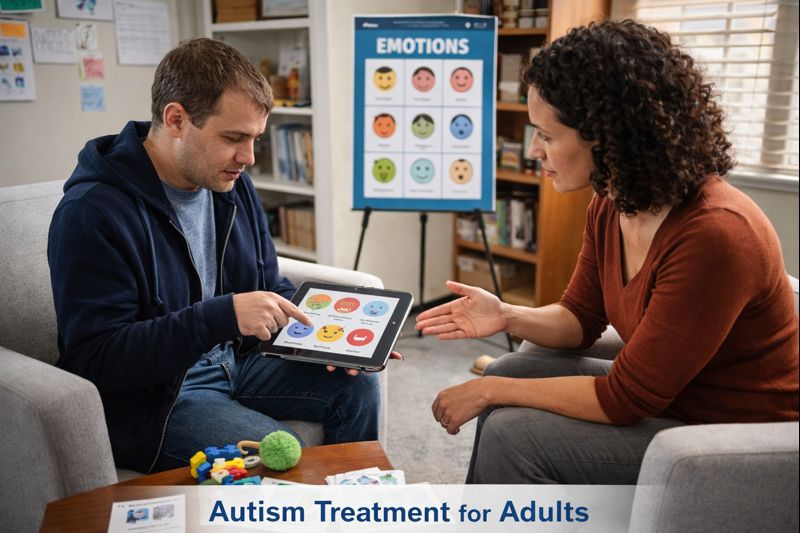
You can find practical, evidence-based strategies that improve daily life and mental health for autistic adults without chasing a one-size-fits-all cure. Targeted therapies—like CBT for anxiety or social skills training—combined with personalized supports and, when appropriate, medication, help you manage symptoms and build skills that matter day to day.
This article explains Autism Treatment Adults approaches that work, how to choose what fits your needs, and how ongoing supports promote better long-term outcomes. Expect clear guidance on therapy options, realistic goals, and ways to measure progress so you can make informed decisions about your care.
Effective Autism Treatment Approaches for Adults
You can use a mix of behavioral, cognitive, social, and medical strategies to address specific challenges such as anxiety, rigid routines, communication differences, and daily-living skills. Each approach targets concrete skills or symptoms and can be combined based on your goals and preferences.
Behavioral Therapies
Behavioral therapies focus on changing observable actions by reinforcing useful behaviors and reducing harmful ones. Applied Behavior Analysis (ABA) and other behavior‑focused programs break tasks into measurable steps, teach alternative responses to problem behaviors, and use consistent reinforcement schedules you and providers agree on.
You should expect goal‑setting, repeated practice, and frequent progress tracking. Sessions may include in‑home training, workplace supports, or community‑based practice to generalize skills across environments. Functional Behavior Assessment (FBA) helps identify triggers and consequences, so interventions target the actual causes of behavior rather than symptoms alone.
Behavioral methods work best when you’re involved in planning and when goals are practical—like improving independent living skills, reducing meltdowns in specific settings, or increasing task completion at work. Fidelity to the plan, data collection, and periodic review keep the approach effective.
Cognitive Behavioral Therapy (CBT)
CBT helps you identify and change unhelpful thoughts and behaviors that drive anxiety, depression, or rigid patterns. Therapists adapt CBT for autistic adults by using more concrete language, visual aids, and increased structure during sessions.
Typical targets include anxiety management, coping with sensory overload, and reducing repetitive negative thinking. Techniques you’ll use include thought records, graded exposure to feared situations, and behavioral experiments. Therapy often involves homework—practicing skills between sessions—and collaborative goal setting.
Expect sessions to last several months, with measurable outcomes like reduced panic symptoms or increased engagement in social or work activities. Choose a clinician experienced with autism to ensure sensory and communication differences inform the pace and methods of CBT.
Social Skills Training
Social skills training teaches specific, practical behaviors for everyday interactions—initiating conversations, reading nonverbal cues, maintaining boundaries, and workplace etiquette. Programs can be group‑based for real‑time practice or individual when you need tailored, one‑on‑one coaching.
Training uses role‑play, video modeling, and feedback to help you apply skills in real contexts. Providers often create scripts and social rules you can customize, then practice in supported community settings to build confidence. Peer‑mediated groups or supported employment programs help translate training into sustained social and vocational participation.
Measure progress with concrete indicators, such as number of successful interactions at work, rate of maintained friendships, or reduced social anxiety in specified settings. Ongoing practice and booster sessions help maintain gains.
Medication Management
Medication doesn’t treat autism itself but can reduce co‑occurring symptoms like anxiety, depression, insomnia, or severe irritability that impair daily functioning. Commonly prescribed classes include SSRIs for anxiety/depression, atypical antipsychotics for severe agitation, and stimulants for attention difficulties when present.
You should work with a psychiatrist familiar with autism to choose medications, set clear symptom targets, and monitor side effects. Start low and go slow with dose adjustments. Keep a written log of symptoms, sleep, appetite, and behavior changes to guide decisions.
Combine medication with behavioral or psychological therapies rather than using drugs alone. Regular review—every few weeks initially, then quarterly—helps determine effectiveness and necessity over time.
Supporting Long-Term Outcomes in Autistic Adults
Targeted skills, practical workplace supports, and local social opportunities form the backbone of lasting success. Each area below lists concrete actions you can take or request from services to improve independence, employment stability, and community belonging.
Life Skills Development
Focus on specific daily tasks you need to live independently: budgeting, meal planning, medication management, transportation navigation, and household chores. Break each skill into step-by-step routines, use checklists or visual schedules, and practice in the actual environment where you will perform them.
Seek training that uses real-world tasks and repeated practice. Occupational therapists, supported-living programs, or community-based life-skills classes can provide individualized goal plans and measurable targets (e.g., prepare three dinners per week, refill prescriptions on time). Track progress with simple metrics like days completed or independence level.
Use technology to scaffold independence. Scheduling apps, medication reminders, grocery delivery, and public-transit planners reduce cognitive load and increase reliability. Teach fallback strategies for unexpected events, such as a missed bus or power outage.
Vocational Training
Identify jobs that match your strengths, sensory tolerances, and preferred routines. Start with job-matching assessments that evaluate skills (computer work, data entry, hands-on tasks), social demands, and typical work environments (quiet vs. noisy). Use those results to target realistic roles and accommodations.
Pursue short, job-focused training and paid work trials. Supported employment programs, apprenticeships, and internships let you test roles with on-the-job coaching. Ask for specific accommodations: written instructions, predictable schedules, noise-reduction options, and a designated point person for feedback.
Measure success with clear workplace goals: hours worked, task completion rate, and supervisor feedback. If a role doesn’t fit, iterate quickly—adjust duties, try different settings, or shift to part-time until stability improves. Long-term employment often depends on small, practical supports rather than major therapy changes.
Community Integration
Identify local groups and structured activities that align with your interests—volunteer programs, hobby clubs, sports teams, or classes. Prioritize regular, scheduled options that offer predictable routines and defined roles to reduce social uncertainty.
Build social skills in context through supported social groups or peer-mentorship models. Start with small, facilitated gatherings and progress to more independent interactions as confidence grows. Use scripts and role-play to practice introductions, conversation openers, and exit strategies.
Advocate for accessible community services. Request reasonable adjustments from employers, leisure centers, and healthcare providers—quiet spaces, clear signage, or appointment reminders. Track participation frequency and satisfaction to guide which activities to continue or modify.