You want a wall cladding that balances lightweight construction, clean aesthetics, and long-term performance—aluminum composite wall panels deliver on all three. They pair thin aluminum faces with a stable core to give you a flat, formable, and low-maintenance surface that installs faster and weighs far less than solid metal alternatives.
As you explore how these panels work, you’ll see why architects and contractors choose them for façades, interiors, and commercial builds: they offer design flexibility, a wide range of finishes, and consistent dimensional stability. The next sections will explain how the panels are built, where they perform best, and what to expect during specification and installation so you can decide if they suit your project.
Understanding Aluminum Composite Wall Panels
You’ll learn what these panels are made of, which properties matter most for performance, and the common material options you’ll encounter when specifying or installing them.
Composition and Structure
Aluminum composite wall panel consists of two thin aluminum sheets bonded to a continuous core. The outer aluminum skins are typically 0.3–0.5 mm thick and provide the finished surface, while the core ranges from 2–6 mm and determines rigidity and fire performance.
You should expect coatings such as PVDF (fluoropolymer) or polyester on the visible aluminum face for weather resistance and color retention. The panels are produced by roll bonding or adhesive lamination; quality of the bond affects flatness and long-term delamination risk.
Key structural terms to note:
- Face skin thickness — affects dent resistance and rigidity.
- Core composition — determines weight, thermal behaviour, and fire rating.
- Backer/primer — improves adhesion and corrosion resistance.
When you specify panels, check the manufacturer’s datasheet for exact skin thickness, core type, bending radius, and tensile strength numbers.
Key Features and Advantages
You get a high stiffness-to-weight ratio that makes panels easy to handle and reduces supporting structure costs. Panels are flat, dimensionally stable, and available in large formats, so you can cover façades quickly with fewer joints.
Coated finishes offer long-term color stability, UV resistance, and graffiti-cleaning capability; PVDF finishes typically outperform polyester in severe climates. Thermal expansion is predictable—plan for expansion joints and proper clip systems to avoid buckling.
Other practical benefits include:
- Low maintenance — periodic washing and touch-up is usually sufficient.
- Fabrication flexibility — you can route, fold, and form panels on site or in shop.
- Cost-effectiveness — compared with solid metal cladding, ACPs lower material and installation labour costs.
Keep fire classification, warranty terms, and local building-code compliance as primary selection criteria when evaluating advantages.
Types of Aluminum Composite Wall Panels
Panel types differ mainly by core material and finish system. Common core categories are:
- Polyethylene (PE) core — lightweight and economical, but limited in fire performance.
- Fire-retardant (FR) mineral-filled core — improves fire resistance and meets many façade requirements.
- A2/non-combustible mineral cores — used where strict non-combustibility is required.
Finish options include:
- PVDF/FEVE coatings — high durability for exterior façades.
- Polyester coatings — cost-effective for interior or low-exposure uses.
- Anodized or metallic finishes — offer a natural metal aesthetic with increased abrasion resistance.
You should match core type and finish to project priorities: egress and fire safety, expected weathering, budget, and aesthetic requirements. Check tested fire classifications (e.g., ASTM, EN) and manufacturer finish warranties before final selection.
Applications and Installation
Aluminum composite wall panels serve as cladding, signage, and interior finishes where flatness, durability, and a consistent painted or metallic surface are required. You’ll find them on building exteriors, retail storefronts, soffits, and feature walls, and you’ll need specific fastening, weatherproofing, and maintenance practices to keep them performing.
Common Uses in Architecture
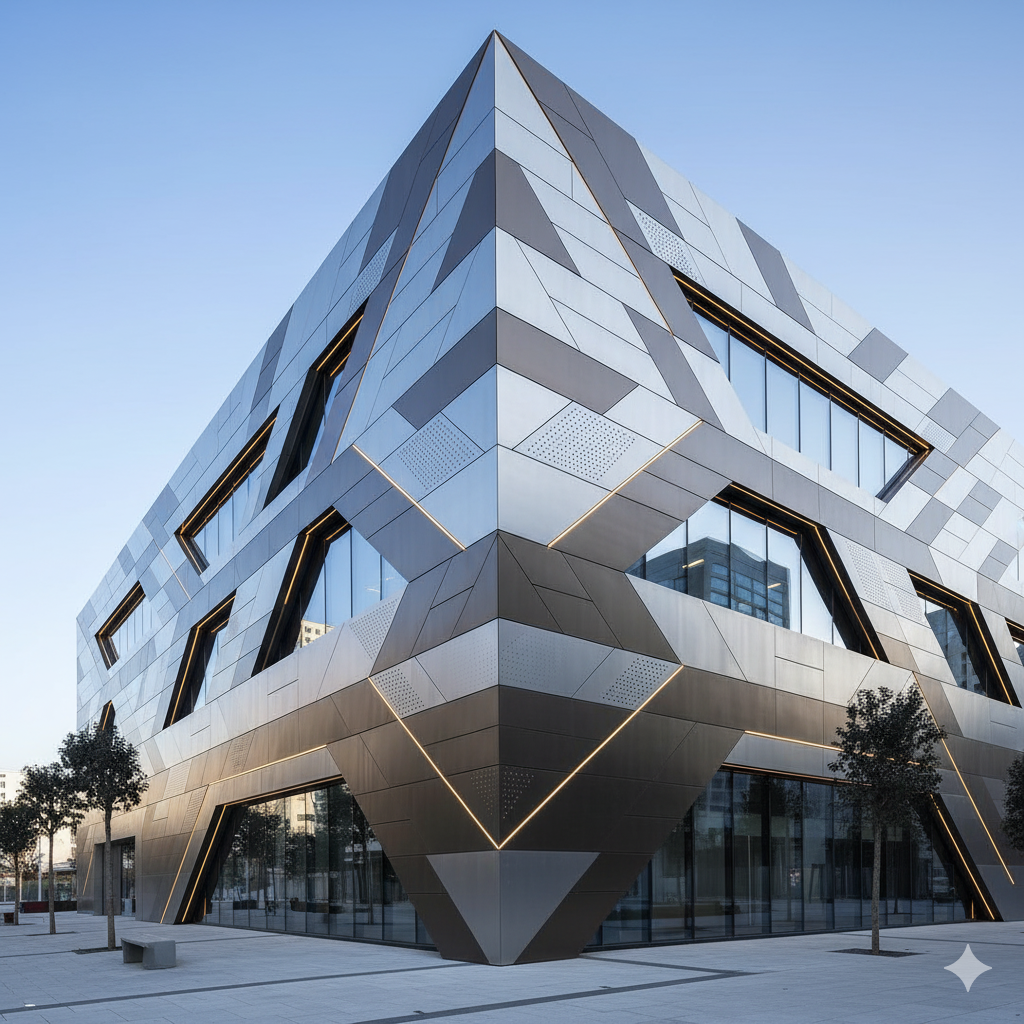
You can use aluminum composite panels (ACP) as exterior curtain walls, parapet cladding, and column covers because they provide clean lines and uniform color over large spans. They’re common on high-rise façades and commercial malls where lightweight panels reduce load on the structure and speed installation schedules.
Interior applications include elevator surrounds, lobby feature walls, and signage where you want durable, easily cleaned surfaces. You’ll also see ACP on canopies and storefronts because panels resist staining and accept detailed fabrications like routed logos and formed edges.
Choose appropriate core types for the project: polyethylene cores for standard use and fire-retardant or mineral-filled cores where codes demand higher fire performance. Match finishes—PVDF for long-term color retention, polyester for cost savings—to exposure and aesthetic requirements.
Installation Methods and Best Practices
You should install ACP on a ventilated rainscreen or a mechanically fixed subframe to allow drainage and airflow behind the panel. Use vertical or horizontal aluminum rails fixed to the primary structure with stainless steel fasteners and neoprene washers to prevent galvanic corrosion.
Panels attach by concealed clips and rivets or visible face-fix screws depending on the design. Maintain uniform panel gaps—typically 6–10 mm—and use compatible gaskets or backer rods to control thermal movement and prevent water ingress. Seal joints with a high-quality, compatible silicone or polyurethane sealant rated for façade use.
Pre-drill holes at clip locations and avoid over-tightening to allow movement. Cut and bend panels with appropriate shears and brakes; protect painted surfaces with release film until completion. Follow local building codes for wind load, fire performance, and anchorage spacing.
Maintenance and Longevity
You should inspect panels annually for loose fasteners, sealant degradation, and trapped debris in mullion pockets. Clean painted and metallic finishes every 6–12 months with mild detergent and soft brushes; avoid abrasive cleaners that remove protective coatings.
Repair chipped paint promptly—clean the area, roughen slightly, prime, and touch up with a matching PVDF-approved coating to prevent corrosion. Replace damaged panels rather than patching when structural integrity or fire-rating is compromised.
Expect decades of service when you use correct core types, follow installation tolerances, and perform routine maintenance. Document fastener types, sealants, and finish specifications in your maintenance log to ensure consistent future repairs.